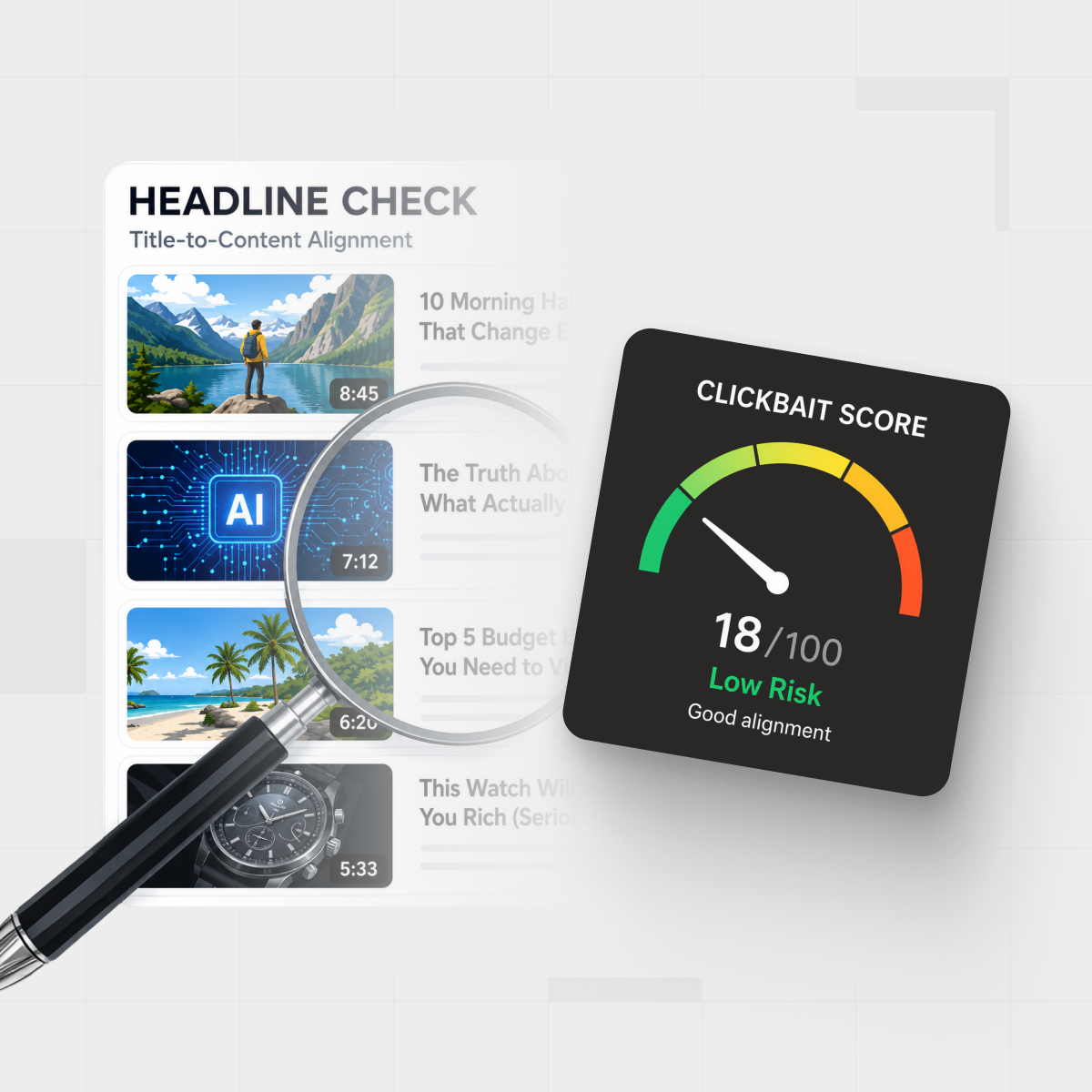




Use real or sample headlines from students’ feeds to make media literacy practice feel authentic.
TL;DR
- Use short, punchy clickbait headlines to help students spot emotional hooks, missing details, and exaggeration.
- This post gives you 25 classroom-ready examples plus guiding questions and activity ideas for grades 6–12.
- Extend the lesson by having students test real YouTube titles with tools like IsThisClickbait and rewrite them to be honest and engaging.
What is clickbait? A student-friendly definition
A recent AP-NORC study found that about 57% of U.S. teens ages 13–17 get news from social media at least once a day, compared with 36% of adults, so learning to read headlines critically is a core civic skill.
A simple classroom definition your students can use is:
Clickbait is a headline, title, or thumbnail that pushes you to click by using strong emotion, curiosity, or surprise, often by leaving out key details or exaggerating what the content delivers.
Clickbait is not always “bad.” Creators and newsrooms still need to hook readers, but students should constantly ask: Does the title fairly represent what’s inside?
How to use clickbait in media literacy lessons
Think of clickbait as training wheels for deeper analysis. The language is short, emotional, and easy to dissect—even for students who struggle with longer informational texts.
In a single class period, you can move students from quick votes on whether a headline feels fair or misleading to annotated examples and a short rewrite activity. The 45‑minute lesson plan below follows that arc using the 25 sample headlines and guiding questions.
If you’re building a larger unit, pair this lesson with an AI lecture summarizer workflow on algorithms, bias, and source evaluation.
25 clickbait examples for students (by type)
All of the headlines below are original, but they closely mirror patterns your students will recognize from YouTube, social feeds, and news sites. Mix and match them based on grade level and subject area.

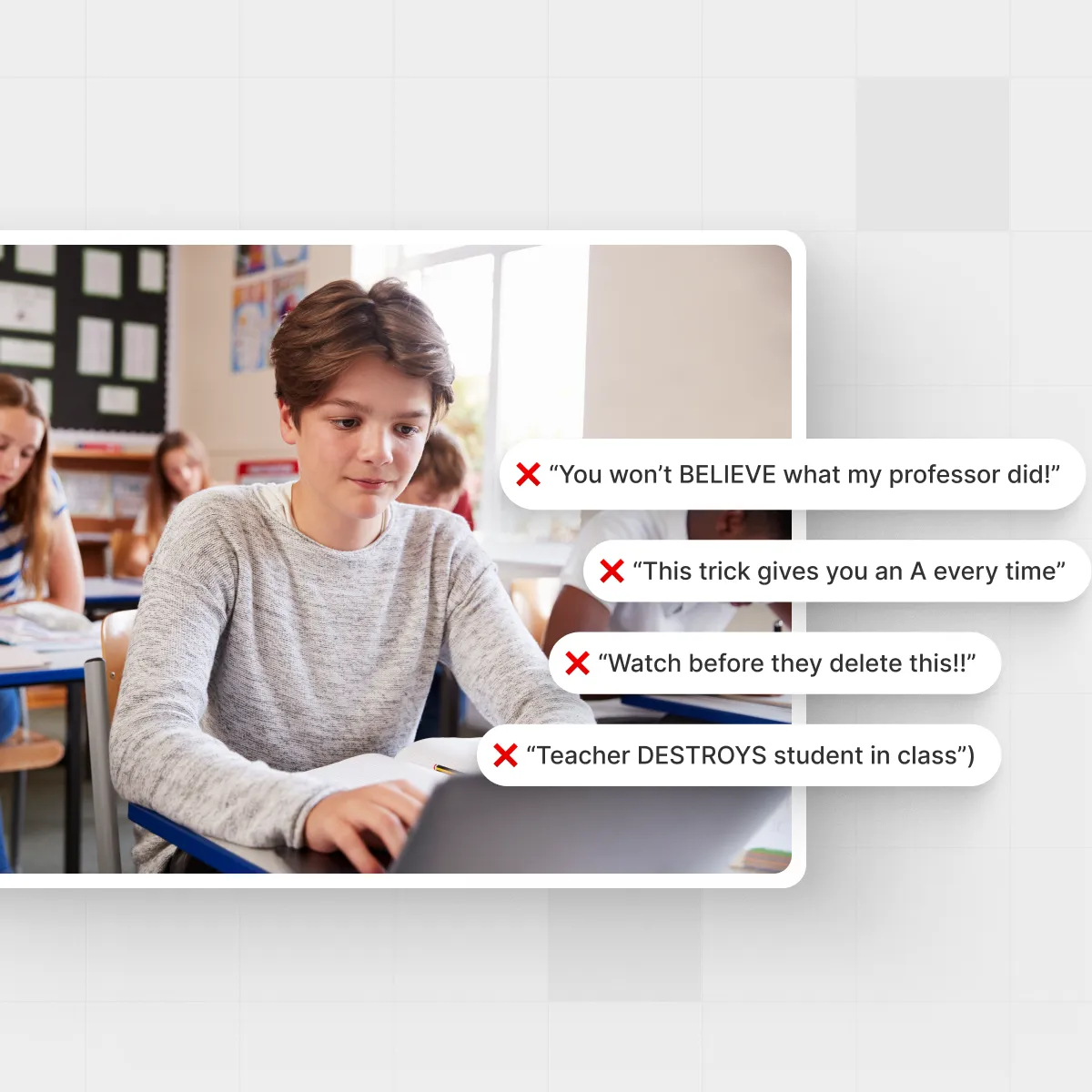
Have students annotate short headlines to spot emotional hooks, missing details, and exaggeration.
Overview of headline types
Type 1: Emotional hook headlines
- You Won’t Believe What This Teacher Found In Her Students’ Essays
- This One Study Habit Is Making Teens Fail Exams, Experts Say
- Parents Are Furious About This New High School Policy
- What This Principal Announced At Assembly Left Students Speechless
- Teachers Are Begging Students To Stop Doing This One Thing In Class
Teaching notes: Have students underline shock words and, in ELA, social studies, or science, swap in a character trait, school policy, or lab safety rule to see how emotion can overshadow specifics.
Type 2: Listicle and “top X” headlines
- 10 Study Hacks Every Straight‑A Student Swears By
- 7 Breakfast Foods You Should Never Eat Before a Test
- 15 Apps Every College Freshman Needs On Their Phone
- 5 Grammar Rules Your English Teacher Lied About
- 12 Scholarships No One Tells High School Seniors About
Teaching notes: Use these to show how numbered lists promise quick, “secret” value; in science or social studies, have students draft their own “5 Lab Mistakes Everyone Makes” or “7 Myths About This Era.”
Type 3: Curiosity gap / “what happened next” headlines
- He Turned In A Blank Test — What The Teacher Did Next Shocked The Class
- She Deleted All Her Social Media For 30 Days — The Results Were Shocking
- We Tried The ‘No Homework’ Experiment For A Week — Here’s What Happened
- This Simple Locker Trick Changed Passing Time Forever
- A Teen Asked AI To Do His Homework — You Won’t Guess The Teacher’s Response
Teaching notes: These tease outcomes without saying what happened; in science, ELA, or social studies, have students write the “missing” sentence or paragraph that would make the headline clearer but still engaging.
Type 4: Fear and urgency headlines
- Your College Application Might Be Rejected For This Tiny Mistake
- Schools Are Hiding This From Students About Standardized Tests
- This Common Note‑Taking Method Could Be Hurting Your Grades
- Before You Click “Submit” On That Assignment, Read This
- Millions Of Students Are Falling For This Online Scam
Teaching notes: Have students highlight alarming phrases (“tiny mistake,” “hiding this,” “online scam”) and connect them to health, climate, money, or election claims where exaggerated fear can do real harm.
Type 5: Celebrity, gossip, and relatability headlines
- Taylor Swift Fans Are Losing It Over Her Old High School Yearbook
- This Viral TikTok Study Hack Is Not What It Seems
- YouTube Star Admits His “Day In The Life Of A Student” Videos Are Fake
- Teachers Reveal What They Really Think During Parent‑Teacher Conferences
- Class President Caught On Camera Doing This Right Before Graduation
Teaching notes: These rely on celebrities, influencers, or classmates; in any subject, have students swap in a content-area figure to see how gossip framing changes how seriously we take information.
Guiding questions for headline analysis
Pair each headline with a small set of reusable questions students answer on sticky notes, in notebooks, or in a shared digital document, such as:
- Emotion: What emotion is this headline trying to stir up—fear, curiosity, anger, excitement, something else?
- Loaded words: Which specific words or phrases crank up the drama?
- Missing details: What key facts are missing (who, what, where, when, how)?
- Prediction: Based on the headline alone, what do you think the article or video will actually show?
- Accuracy guess: On a scale from 1–5, how well do you think this headline will match the real content?
You can turn this into a reusable headline annotation sheet and plug in real posts during current events or research units. If you use playlists for class, tools like YouTube summary extensions make it easy to pull in titles, thumbnails, and transcripts side by side.
Whole-class discussion prompts about credibility
After students work through a few examples, zoom out to questions about trust and online reading, such as:

Use whole-class discussions to connect headline tactics to broader ideas like credibility and bias.
- Which headline type feels most convincing to you personally? Why?
- Is it ever okay to exaggerate in a headline if the content is still helpful?
- Where is the line between “good marketing” and being misleading?
- How might clickbait about health, money, or politics cause real‑world harm?
- Do you think younger students (elementary or middle school) read these headlines differently from adults?
Connect this work to your existing news literacy activities or source evaluation checklists, and to tools like the playlist length calculator if you use longer YouTube playlists for class.
Activity: Rewrite clickbait into honest, engaging headlines
To move from “spotting problems” to “building better habits,” have students rewrite some of the headlines above. It also works as a quick writing mini‑lesson in ELA, social studies, or science.
A quick structure that works well:
- Choose 5–8 headlines from the list or pull real ones from your students’ feeds.
- Ask students to judge each one: fair, slightly exaggerated, or misleading.
- For the ones that go too far, have students rewrite them using these rules:
- Keep the main topic the same.
- Use clear, specific nouns and verbs.
- Check that a reader could reasonably predict the content.
- Still aim to catch attention using curiosity or relevance.
- Share drafts, discuss which versions feel honest, and compare them to the originals.

Turn rewriting clickbait into a collaborative activity, so students see how small word choices change trust.
Teacher tip: In writing conferences, talk through why a headline feels trustworthy. Students often discover that “boring but accurate” can become “engaging and accurate” with just a few word changes.
If you rely heavily on video in class, you can extend this by asking students to use a clickbait workflow on YouTube titles for course playlists. They can compare their own headline scores to the tool’s explanation and decide how they might rewrite titles to set clearer expectations.
45-minute clickbait lesson plan (grades 6–12)
Here’s a simple 45‑minute structure you can run in one class period using the sample headlines, guiding questions, and rewrite activity from earlier in this post.
Objectives
- Students will identify common clickbait “moves” (emotional hooks, missing details, exaggeration) in short headlines.
- Students will annotate headlines with questions and predictions about the underlying content.
- Students will rewrite selected headlines to be accurate, specific, and still engaging.
Materials
- Printed list of 8–12 sample headlines from this post (mixed types).
- Headline annotation sheet (one per student or pair).
- Projector or screen to display example headlines and student rewrites.
Timing breakdown (45 minutes)
- Warm‑up (10 minutes): Project three headlines. Students vote fair, exaggerated, or misleading, then name the cues they noticed; capture key vocabulary on the board.
- Guided practice (15 minutes): Give students an annotation sheet and 4–6 headlines. Model one together, then have pairs underline loaded words, circle missing details, and write a one‑sentence prediction for each using the guiding questions as a checklist.
- Rewrite (10 minutes): Each pair chooses one misleading headline and rewrites it using the rules from the rewrite activity: same topic, more accurate and specific, with one engaging element (curiosity, relevance, or surprise).
- Share (5 minutes): Volunteers share original vs. revised headlines. Ask which version classmates would rather see in their feed and why.
- Reflection (5 minutes): Students answer a quick exit ticket, such as “What is one headline move you’ll watch for this week?” or “Where do you most often see clickbait?” Use responses to plan your next lesson or pair with an IsThisClickbait for students dashboard later in the unit.
Grade-level adaptations
Grades 6–8: Use 4–6 school‑based headlines, model most annotations aloud, and give sentence stems on the annotation sheet. Grades 9–12: Bring in more complex health, money, and civic headlines from students’ own feeds and add quick source checks so the work supports research and argument writing.
More media literacy resources
Clickbait is an easy on‑ramp to broader conversations about algorithms, recommendation systems, and information overload. From here, you might:
- Pair this lesson with a short article on YouTube recommendations.
- Have students track headlines they click, skip, or regret.
- Use IsThisClickbait in class to analyze titles, thumbnails, and transcripts for your next media literacy lesson (IsThisClickbait for students).
- Introduce a simple note‑taking system so students compare what a video promised to what it delivered, then connect the unit to Civic Online Reasoning lessons.
The core habit you’re building is simple and powerful: pause, question, then click. Once students learn to read headlines that way, they carry it into every feed and search result they scroll past.
Key Takeaway
When you bring structured clickbait examples into your classroom, especially short, teen‑relevant headlines, you give students a safe way to practice skepticism. With 25 headlines, guiding questions, a 45‑minute lesson plan, and rewrite tasks, you can build a full lesson that strengthens both media literacy and writing skills in a single period.
Teacher reflection prompt
After you try this lesson, jot down one headline that your students struggled with and one change you would make next time. Revisit those notes before you bring in real posts from their feeds or introduce a more advanced clickbait analysis workflow later in the unit.