



When traffic is flat and someone asks for “more clickable” titles, this guide shows how to use clickbait techniques that grow traffic without torching the trust you fought to build with readers.
We’ll talk about where curiosity stops, and deception starts, practical headline frameworks your editors can use tomorrow morning, and how tools like IsThisClickbait help you keep both analytics and ethics pointed in the same direction.
TL;DR
- Readers don’t hate “clickbait” - they hate feeling tricked.
- Good clicky headlines set a clear promise, then overdeliver on it.
- Editors need shared rules: what’s allowed, where the line is, and red flags to skip.
- Automated tools can sanity‑check whether your titles, thumbnails, and content actually match.
What people really mean when they say “clickbait”
Ask three people to define clickbait and you’ll get four opinions. For many readers, it means “I clicked and felt cheated.” For growth teams, it often means “headline that gets people off the couch and into the article.” Those are very different things.
The classic definition of clickbait is about misleading or sensational titles that leave out key facts to grab attention. Editors don’t have to play that game. You can use urgency, curiosity, and emotion while still stating the true payoff of the piece. Marketing glossaries, such as clickbait definitions and social media clickbait, make the same distinction between attention‑grabbing headlines and outright deception.
Inside your newsroom or content team, the conversation isn’t “clickbait: yes or no?” The real question is, “What level of surprise are we comfortable with, and what feels like a broken promise?”
The line between curiosity and deception
The easiest way to think about ethical clickbait: promise → journey → payoff.

Editors weigh curiosity against clarity to keep clickbait techniques on the right side of the line.
- Promise: What benefit or story does the headline clearly suggest?
- Journey: Does the article, video, or podcast actually head in that direction?
- Payoff: Does the ending feel bigger, sharper, or at least equal to the promise?
Deception happens when the promise and payoff live in different universes. “This tool doubled our subscribers overnight,” which turns out to be a vague opinion piece? That’s when people close the tab, muttering under their breath.
Curiosity‑driven headlines work best when they sit on clear, scannable, substantial content, so many editors pair bold titles with clear subheads and strong summaries.
How platforms treat clickbait
It’s not just readers who care about the promise‑versus‑payoff gap: platforms like Facebook now bake anti‑clickbait rules into their ranking systems, describing clickbait in News Feed updates as headlines that withhold key information, mislead users, or consistently hide, exaggerate, or twist basic facts.
YouTube’s spam and deceptive practices policy similarly flags “misleading metadata or thumbnails” when titles, descriptions, or thumbnails trick viewers into expecting content that never appears in the video, such as a celebrity who isn’t in the clip or a supposedly “free” offer that is really a paid upsell; see YouTube’s misleading metadata policy for details.
In practice, these rules target three patterns: withholding key details (“You’ll never guess what this politician did” with no subject), exaggerating outcomes (“guaranteed overnight success” when you know it takes months), and distorting the premise (a sober‑sounding headline that actually leads to an unrelated rant or product pitch); if your headline would feel comfortable under those policies, you’re almost certainly on the ethical side of the line.
7 Ethical clickbait moves editors can stand behind
Here are practical headline and thumbnail patterns that keep your analytics team happy and your ombudsperson relaxed.

Brainstorming ethical clickbait techniques helps teams align on what’s in bounds for their brand.
1. Lead with the real outcome
Start with what actually changes for the reader or viewer. Instead of “You won’t believe what this marketer did,” say “The email test that cut unsubscribe rates by 42%.” The curiosity comes from “How?”, not “Is this even real?”
This is especially helpful for tutorial videos, lectures, and explainers. State the outcome, then let curiosity spice up the exact wording.
In practice, teams that test toned‑down, accurate promises against over‑hyped ones often see similar click‑through but far fewer annoyed replies and more “this matched what I expected” feedback.
2. Use numbers that match the experience
Lists and numbers still pull clicks, but they should line up with the structure of the piece. If the title says “7 ways,” people expect seven skimmable points, not three that are real and four that repeat themselves.
For long‑form videos, this might look like chapters or timestamps that mirror the numbered promise. Tools like IsThisClickbait’s AI YouTube analyzer help surface those key sections so your editor can match the number in the headline to the actual flow.
3. Create a curiosity gap, not an information blackout
Curiosity gaps work when you reveal enough to anchor expectations, then leave one clear question unanswered. For example:
- “We changed one word in our pricing page. Here’s what happened.”
- “This line in your syllabus is costing students hours each week.”
What you skip should be the details, not the entire premise. Headlines that hide the subject (“You won’t believe what happened next”) feel cheap because they offer no solid reason to click besides raw FOMO.
4. Add format signals directly in the title
Readers appreciate knowing what they’re getting into. You can keep a punchy hook while signaling the format:
- “How we rescued our churn rate: A postmortem”
- “Why that viral productivity tip backfires [Opinion]”
- “The state of B2B webinars in 2026 [Data report]”
These tags help set expectations for depth, subjectivity, and style. They’re especially helpful if your publication blends news, commentary, and sponsored content.
5. Make thumbnails and titles work as a pair
In feeds like YouTube, the thumbnail does half the work. Strong teams plan the two together:
- The title states the core promise (“The 3‑step method we use to write headlines in 10 minutes”).
- The thumbnail text sharpens one angle (“Step 2 changed everything”).
What you don’t want: titles that suggest sober reporting paired with thumbnails that look like a late‑night infomercial. Consistency across the pair matters as much as the words themselves.
If you publish a lot of video, run a few of your own URLs through the IsThisClickbait analyzer and compare the “clickbait score” with your gut. It’s a low‑stakes way to pressure‑test your instincts.
6. Use emotional language that still respects nuance
People respond to emotional framing: frustration, relief, surprise, pride. The trick is to describe a feeling your audience already has, instead of inventing drama from thin air:
- “Why your analytics dashboard makes smart people feel clueless.”
- “The silent reason students rewatch lectures three times”
This kind of copy says, “We see what your life is like,” not, “We’re trying to wind you up.”
7. Let your summary balance out the spice
If the headline has a little extra flair, use the standfirst, meta description, or on‑page summary to add clarity. Newsrooms have done this with subheads for decades:
Headline: “The metric your growth team secretly dreads.”
Subhead: “Why payback period, not CAC, should drive your 2026 budget.”
Search teams can do the same with meta descriptions. Google’s own documentation on titles and snippets encourages accurate, descriptive text that matches what’s on the page.
Red‑flag tactics that drain trust
Some patterns give you a spike in clicks the first week and headaches for months after. Editors can flag these in the style guide as “no, thanks”:
- Bait and switch: Headline promises data; story is a thin opinion piece.
- Fake urgency: “Before it’s gone forever” on content that will live on your site for years.
- Manufactured outrage: Titles designed only to provoke comments, not to inform.
- Ambiguous “you won’t believe” frames: No subject, no context, just pure mystery box.
- Over‑promising results: “Guaranteed,” “overnight,” “effortless” when you know that’s not how it works.
When in doubt, ask: “If this headline ran on a competitor’s site, would we roll our eyes?” If the answer is yes, your audience will, too.
Experimental work on clickbait and trust finds that curiosity headlines may win the initial click, but repeated exaggeration erodes how credible people think the outlet is.
Studies on clickbait source credibility and headline framing echo what most analytics teams see: even small doses of misleading language can drive unsubscribes, complaints, and lower ratings of fairness and accuracy, even when people still click.
A clickbait‑safe editorial checklist
Before you push a punchy headline live, run this quick checklist or adapt it into your internal docs or CMS guidelines.
- Promise check: In one sentence, can you state what the reader will learn or feel?
- Content match: Does at least 80% of the piece focus on that promise?
- Format signal: Is it clear whether this is news, analysis, opinion, or a guide?
- Emotion check: Are we reflecting real feelings, not stirring them up just for clicks?
- Thumbnail alignment (for video): Would someone who muted the video still get what it’s about from title + thumbnail?
- Reader respect: Would a longtime subscriber feel talked down to?
- Brand fit: Does this sound like us, not a random viral page?
How IsThisClickbait helps keep you honest
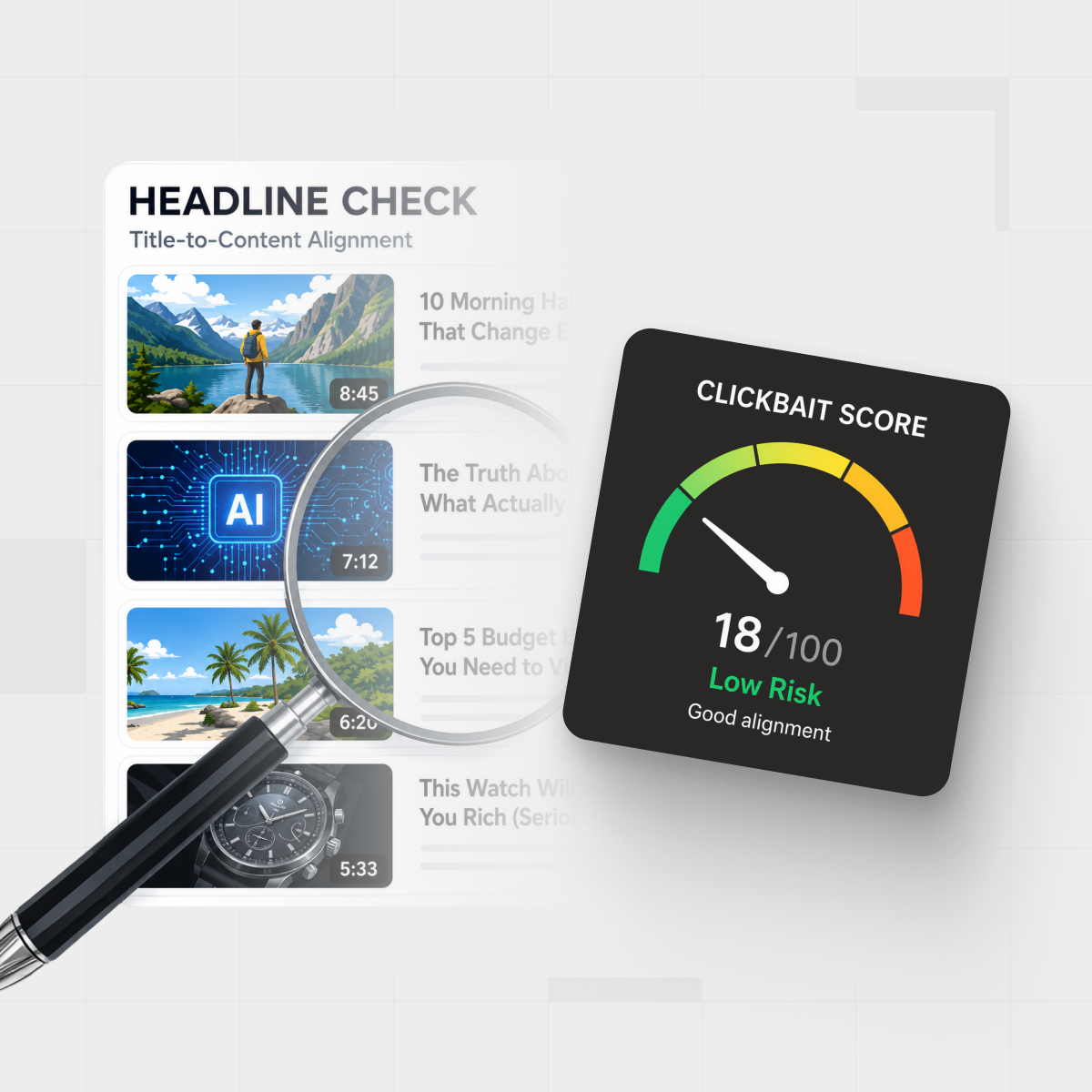
Gut checks are good, but having a second set of eyes that never gets tired is even better: IsThisClickbait pulls the transcript from your videos, compares it to your title and thumbnail, and gives you:

Analytics tools help teams evaluate which clickbait techniques feel honest while still performing.
- A clickbait score with a plain‑language explanation.
- Summaries, key points, and timestamps your editor can skim.
- Highlights of where the promise and actual content feel out of sync.
Editors and content leads use this both as a “headline honesty” check and as a research assistant, especially for webinars, lectures, or deep‑dive product videos that need to be turned into structured notes your whole team can reference.
For a closer look at how the analyzer works, see the features overview and our YouTube title analyzer guide.
For recurring formats, you can spot patterns — which headline styles pull more qualified traffic, and which ones fill your comments with “this wasn’t what I expected” complaints — and start analyzing a video in a separate tab while your CMS is open.
FAQ: clickbait questions editors keep asking
Is all clickbait bad?
No. The internet uses “clickbait” as a catch‑all insult, but readers happily click high‑energy headlines that respect their time and intelligence. What they remember — and complain about — is being tricked.
How do I explain this to stakeholders who want “more viral” content?
Bring examples. Show a headline that got traffic but also angry comments or unsubscribes, next to one that did both traffic and positive engagement. Framing the discussion around long‑term trust, not just this week’s spike, tends to land better in leadership meetings.
Does this apply only to websites and YouTube?
The principles are the same across newsletters, podcasts, course platforms, and social clips: clear promise, aligned content, honest payoff. The format changes, but the reader’s memory of how you treated them does not.
Can we standardize this in our style guide?
Yes - and you probably should. Add a short section on headline philosophy, concrete examples of what’s in bounds, and a short list of banned moves. Link to tools your team can use, such as IsThisClickbait for video or your preferred A/B testing setup for landing pages.
Takeaway: Your brand doesn’t have to pick between respect and reach. With a shared set of rules, honest curiosity gaps, and a few smart tools, your headlines can pull readers in and still let you sleep at night.