



You finish a chapter, close the book, and feel pretty good. Two days later, someone asks what it was about and you stare at the ceiling trying to piece together more than a vague headline.
If you’ve ever wondered how to remember what you read without spending hours rewriting the chapter, you’re in the right place. The trick isn’t more highlighting or prettier notes. It’s training your brain to pull ideas out, not just let them slide in.
In this guide you’ll get a simple, reusable 20‑minute active recall routine you can run after every chapter—whether you’re reading a textbook, a business book, or a transcript from a YouTube lecture you ran through IsThisClickbait.
TL;DR: The 20-minute routine in 5 quick moves
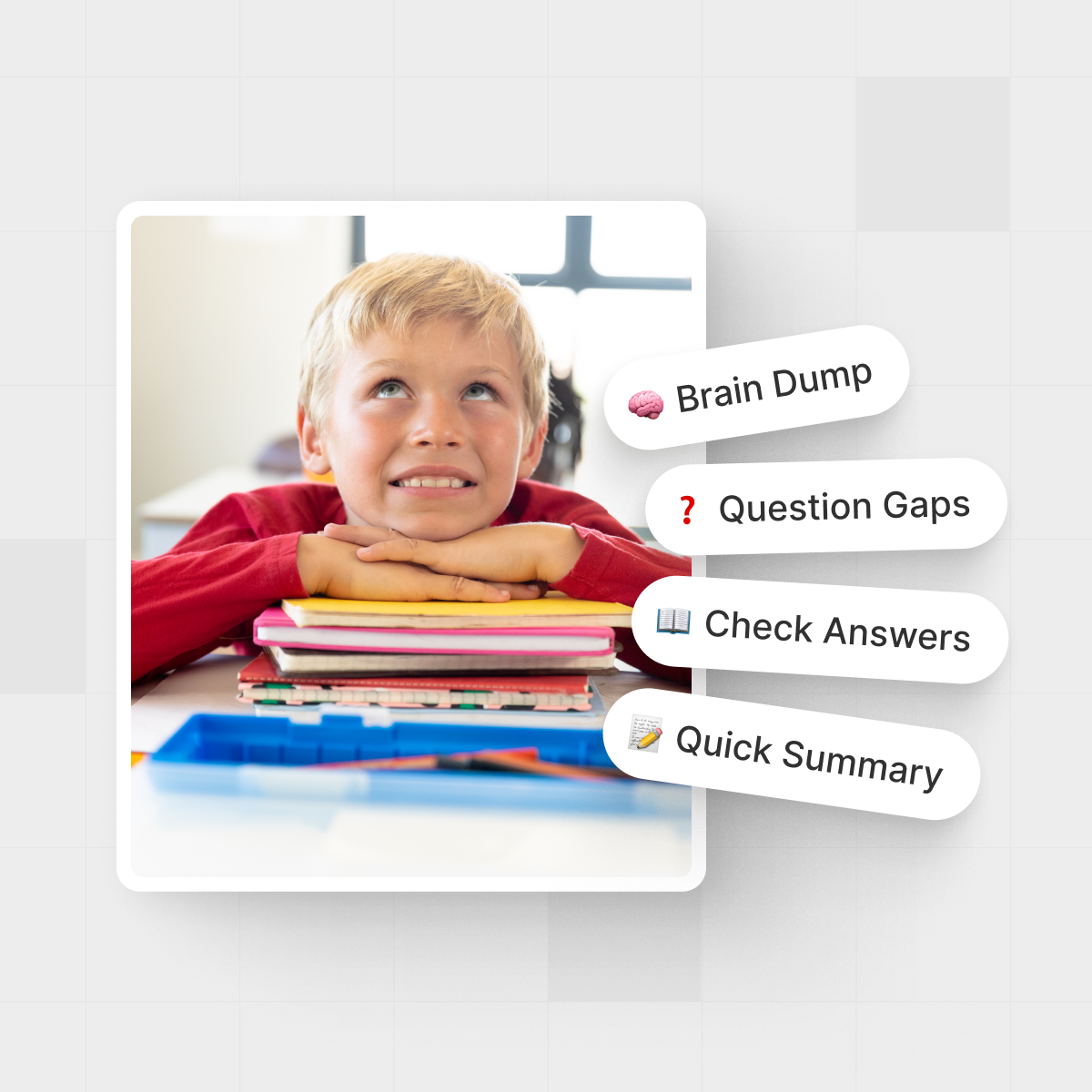
- Minutes 0–4: Close the book and brain‑dump everything you remember on a blank page.
- Minutes 4–8: Turn gaps into questions: “Why…?”, “How…?”, “What’s the difference between…?”
- Minutes 8–14: Reopen the chapter, check your answers, and fill in missing pieces in your own words.
- Minutes 14–18: Write a 3–5 bullet summary as if you were texting a friend who hasn’t read it.
- Minutes 18–20: Schedule quick reviews (tomorrow, in 3 days, in a week), or drop the questions into a spaced repetition app.
That’s it—no fancy system, just consistent retrieval. The rest of this article explains why it works and how to make it stick for books, articles, and YouTube videos.
Why you forget most chapters within days
The problem usually isn’t your intelligence; it’s the way reading is set up. Most of us were trained in “passive reading”: eyes slide across the page, maybe we highlight a sentence or two, then we turn the page and repeat. Psychologist Hermann Ebbinghaus showed that memory for new material drops off fast if you never review it; without follow‑up, you may remember only about a third of what you read after a day—a pattern called the “forgetting curve.

Without active recall, details from each chapter fade quickly along the forgetting curve.
By the numbers
- Without review, you may remember only about a third of new material after a day—but a quick active recall session after each chapter dramatically slows that slide.
Re‑reading feels comforting (“oh yeah, this looks familiar”), but familiarity and recall are different skills. Real learning shows up when you can answer questions, explain an idea to someone else, or apply it in a new context—without the book in front of you.
“If you can’t explain it simply, you don’t understand it well enough.” — often attributed to Einstein
Active recall leans into that idea. Instead of asking “Have I seen this before?”, it asks “Can I bring this back from memory?” That one shift is why this routine works so well.
What active recall is (and why it beats re-reading)
Active recall is the habit of testing yourself directly from memory: closing the book and asking, “What were the three main arguments here? How would I define this term without looking?”
Learning scientists call this retrieval practice; decades of retrieval practice studies show that the small struggle to remember strengthens the pathways to that information, like a workout for the idea.
- Re‑reading mostly trains recognition: “This looks familiar.”
- Highlighting can be fine, but on its own it’s just coloring.
- Active recall trains performance: “Can I get this idea back on my own?”
That’s also why flashcards and spaced repetition tools like Anki work so well: they force you to pull the answer from memory instead of staring at it in a paragraph. The 20‑minute routine below wraps the same principles into a simple habit you can use after each chapter, and you can pair it with tools like the IsThisClickbait browser extension when you’re learning from YouTube instead of a paper book.
The 20-minute active recall routine, step by step
Here’s the full routine you can run after any chapter—non‑fiction books, textbooks, long articles, or a transcript generated from a video summary.
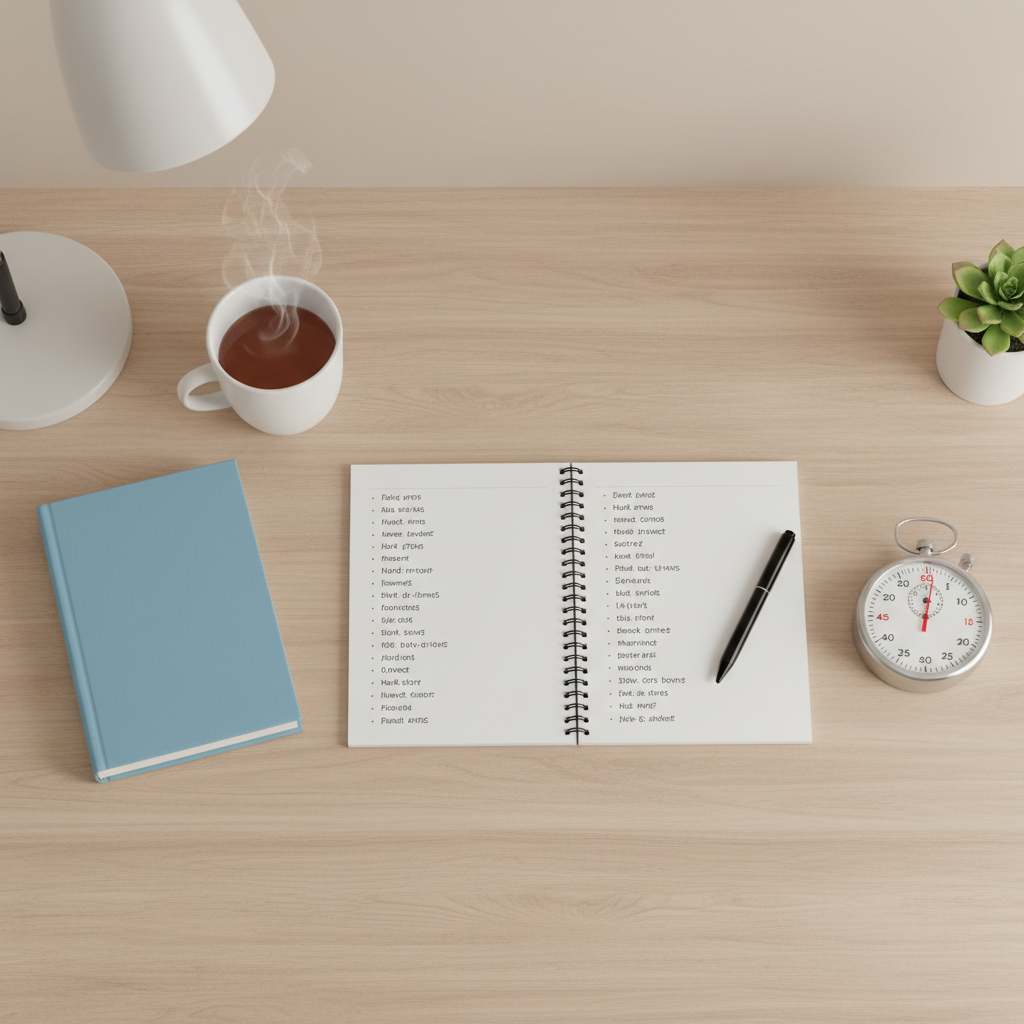
A 20‑minute timer and a simple notebook are enough to run this active recall routine.
Overview: minute-by-minute breakdown
Step 1 (minutes 0–4): Close the book and brain‑dump
As soon as you finish the chapter, close the book or tab. On a blank page—paper or digital—brain‑dump everything you can remember: key terms, main arguments, important examples, and any diagrams or models (draw rough versions if needed).
- Key terms and definitions
- Main arguments or steps in a process
- Examples or stories that stood out
- Simple sketches of any diagrams or models
Don’t worry about structure or spelling; you’re just dumping the contents of your mental backpack onto the floor.
Step 2 (minutes 4–8): Turn gaps into questions
Now scan your brain‑dump and notice what’s missing or fuzzy. For each fuzzy spot, write a concrete question so you can test yourself on it later:
- “Why did the author say traditional studying fails?”
- “How does active recall differ from summarizing?”
- “What were the four steps in the framework?”
Questions turn vague “I should know this” feelings into specific prompts you can train with later—the raw material for flashcards, quizzes, or a quick self‑test tomorrow morning.
Step 3 (minutes 8–14): Open the chapter and check your work
Reopen the chapter and go through your questions and brain‑dump with the text beside you:
- Underline where the chapter answers each question.
- Add missing steps or correct anything you twisted.
- Rewrite tricky ideas in your own words right under the original notes.
Think of the book as the answer key: you made your best guess, now you’re checking and fixing. That effort‑plus‑feedback combo is one of the strongest ways to lock in learning.
Step 4 (minutes 14–18): Write a “text a friend” summary
Pretend a friend messages: “Quick, what was that chapter about? Just the parts you should remember.” Under your notes, write:
- 3–5 bullet points capturing the main ideas
- 1–2 sentences on why this chapter matters to you
- Any “do this next” actions you want to take
The goal isn’t perfect coverage; it’s usefulness. What would future‑you actually care about seeing again during exam week or before a big project?
Step 5 (minutes 18–20): Plan quick reviews
To keep all this from fading, schedule tiny check‑ins:
- Revisit your questions and summary tomorrow.
- Check them again in 3 days.
- Then again in about a week.
You can do this on a calendar, in a simple to‑do app, or in a spaced repetition app based on spaced repetition research. If you’re collecting notes from YouTube videos with our YouTube study tips, attach these questions right next to the summary so everything lives in one place.
Example: using the routine on a non-fiction chapter
Brain‑dump (rough version)
- Deep work = focused, no‑distraction work that moves the needle.
- Shallow work = emails, quick tasks, not much value.
- Rules: schedule deep work blocks, make it a regular habit, cut down on distractions.
- Example of someone working in intense blocks (author’s story about writing a book fast).
Questions you notice
- “What were the exact rules—was it three or four?”
- “What did he say about social media?”
- “How long should a deep work block be?”
Checked notes + summary
- Deep work is rare and valuable; shallow work is common but easier.
- Three key rules: work deeply, embrace boredom, quit social media strategically.
- Plan deep work blocks on calendar (60–90 minutes).
You’ve done more than remember the chapter; you’ve turned it into something you can act on—the real goal when you’re figuring out how to remember everything you read from non‑fiction. In practice, students who swap pure re‑reading for this kind of routine often feel calmer before quizzes and need less last‑minute cramming.
Using the same routine for YouTube videos
A lot of modern “reading” happens on YouTube: lectures, crash courses, explainers. The same active recall routine works there too, especially if you turn the video into text first.

Turn long YouTube videos into summaries and notes you can actively review, just like a chapter.
With IsThisClickbait, you can open a video in the extension or web app to get a clean summary plus full transcript, and see an honesty‑vs‑clickbait score so you know if the title matches the substance.
From there, treat the summary like a short chapter:
- Read the summary once.
- Close it and brain‑dump what you remember.
- Write questions about anything fuzzy.
- Reopen the summary or transcript, check your answers, and refine.
For long playlists, this turns YouTube into something closer to a textbook—with searchable notes and clear key points. Learn more in our guide to AI video summary tool.
FAQs: how do you remember what you read?
What if I don’t have 20 minutes after every chapter?
You can shrink the routine to five minutes and still get most of the benefit: spend about two minutes brain‑dumping three main ideas with the book closed, two minutes turning gaps into three questions, and one minute peeking back at the chapter to fix any big errors. A short burst of active recall beats another 20 minutes of passive reading.
How to remember everything you read for exams?
For exams, combine the 20‑minute active recall routine with spaced review. Turn your questions into digital flashcards, tag them by chapter or topic, and review them daily at first, then every few days. Stack this with practice questions or past papers so you train both recall and application, not just recognition. If your class posts recorded lectures on YouTube, you can run them through the IsThisClickbait paid plans to get more generous summary limits, then use the transcripts to build your own cards in Anki or your note app.
Can I use this routine for fiction?
Yes. For fiction, use the same steps but focus your brain‑dump on:
- Characters and their motivations
- Major plot points and twists
- Themes or questions the story raises
That way you keep track of arcs and deeper meanings instead of letting books blur together.
How do you remember what you read without taking long notes?
You don’t need long or beautiful notes; you need useful prompts. A single page with a messy brain‑dump, a handful of well‑written questions, and a 3–5 bullet summary will help you far more than pages of copied paragraphs. Keep the routine lean so you’ll actually use it after real‑world reading sessions.
Next steps
Learning how to remember what you read isn’t about a perfect memory; it’s about running a short, repeatable process that trains recall instead of just chasing that “this looks familiar” feeling.
The 20‑minute routine here gives you that process:
- Close the book and brain‑dump.
- Turn gaps into questions.
- Check against the text and correct.
- Write a teach‑a‑friend summary.
- Schedule quick reviews.
Do this for a week of chapters and you’ll feel the difference: concepts stay reachable, you can explain ideas without flipping through pages, and study sessions feel less like cramming and more like connecting dots.
If a lot of your learning now comes from YouTube, pair this routine with IsThisClickbait: get fast summaries, honest clickbait checks, and searchable transcripts so your video queue turns into study material you can actually remember.