


You know the pattern: a video swears you’ll learn “the secret trick every pro editor uses,” and five minutes later, you’re still waiting for anything new. That small betrayal adds up — viewers stop trusting the creator, the algorithm notices people dropping off, and the platform feels a bit more spammy.
People usually blame “clickbait,” but the real problem is misleading YouTube titles — headlines that set an expectation the video never really delivers on. If you’re a creator, that line between punchy and deceptive can feel blurry when everyone else in your niche seems to be shouting in all caps.
TL;DR
- A title can be bold and curiosity-driven without promising something the video doesn’t deliver.
- Short-term spikes from deceptive headlines trade away subscriber trust, watch time, and even channel safety.
- YouTube’s policies and advertising rules both care about honesty, especially when money or sensitive topics are involved.
- Creators can use ethical “clickbait” formulas and tools like IsThisClickbait to sanity‑check their own videos before publishing.
This guide covers when misleading YouTube titles start doing more harm than good, how they affect click‑through rate (CTR) and watch time, and how to keep headlines exciting without burning audience trust.
What counts as a misleading YouTube title?
Not every dramatic headline is deceptive. Viewers expect a bit of intrigue. The problem starts when the title, thumbnail, and actual content no longer line up.
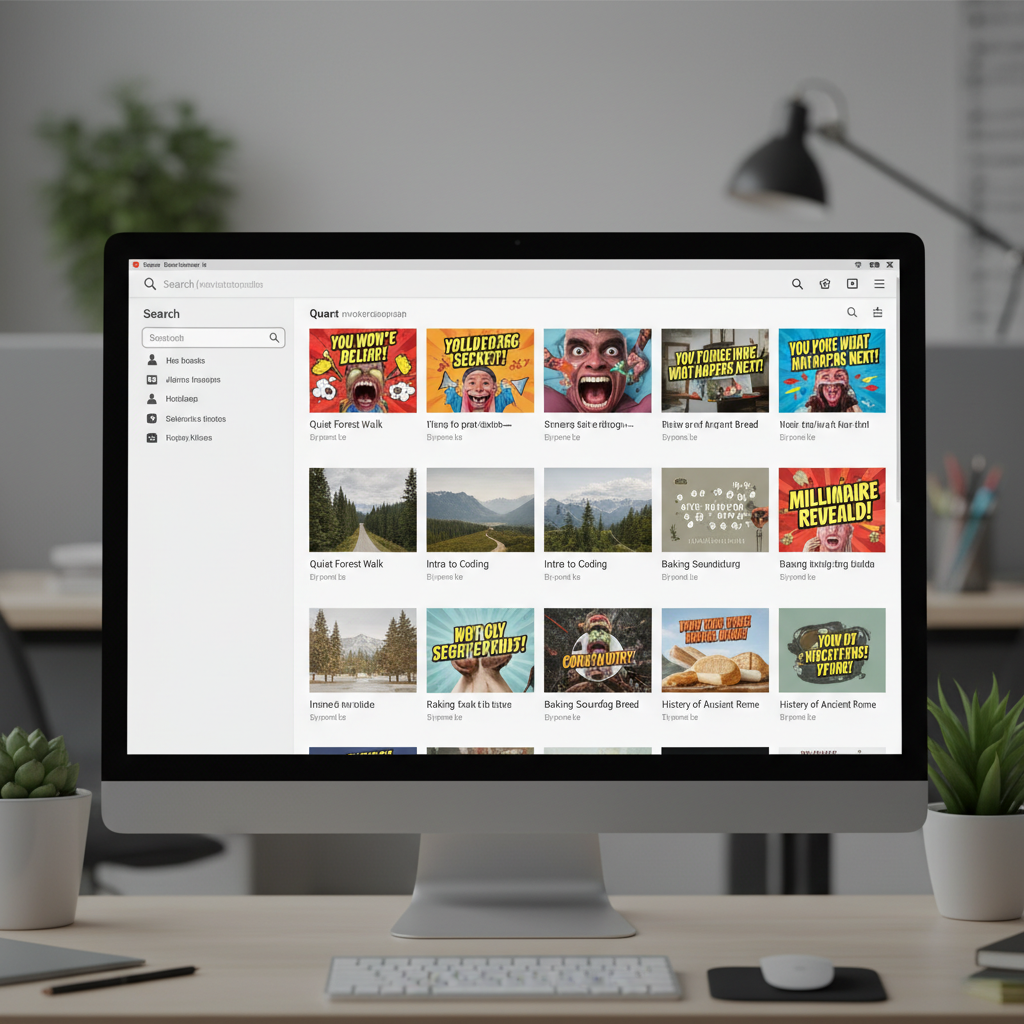
Clickbait vs. a flat‑out lie
Here’s a simple way to think about it:
- Curiosity‑driven title: Emphasizes the most surprising or emotional part of your video, but the promise still matches what’s inside.
- Misleading title: Uses numbers, names, or claims your video never backs up, or hints at events that never happen.
As a rule of thumb: if a viewer watches a reasonable chunk of the video and feels, “That’s not what I signed up for,” your title probably crossed the line.
Honest titles exaggerate the emotion of your story; misleading titles invent a story that never happens.
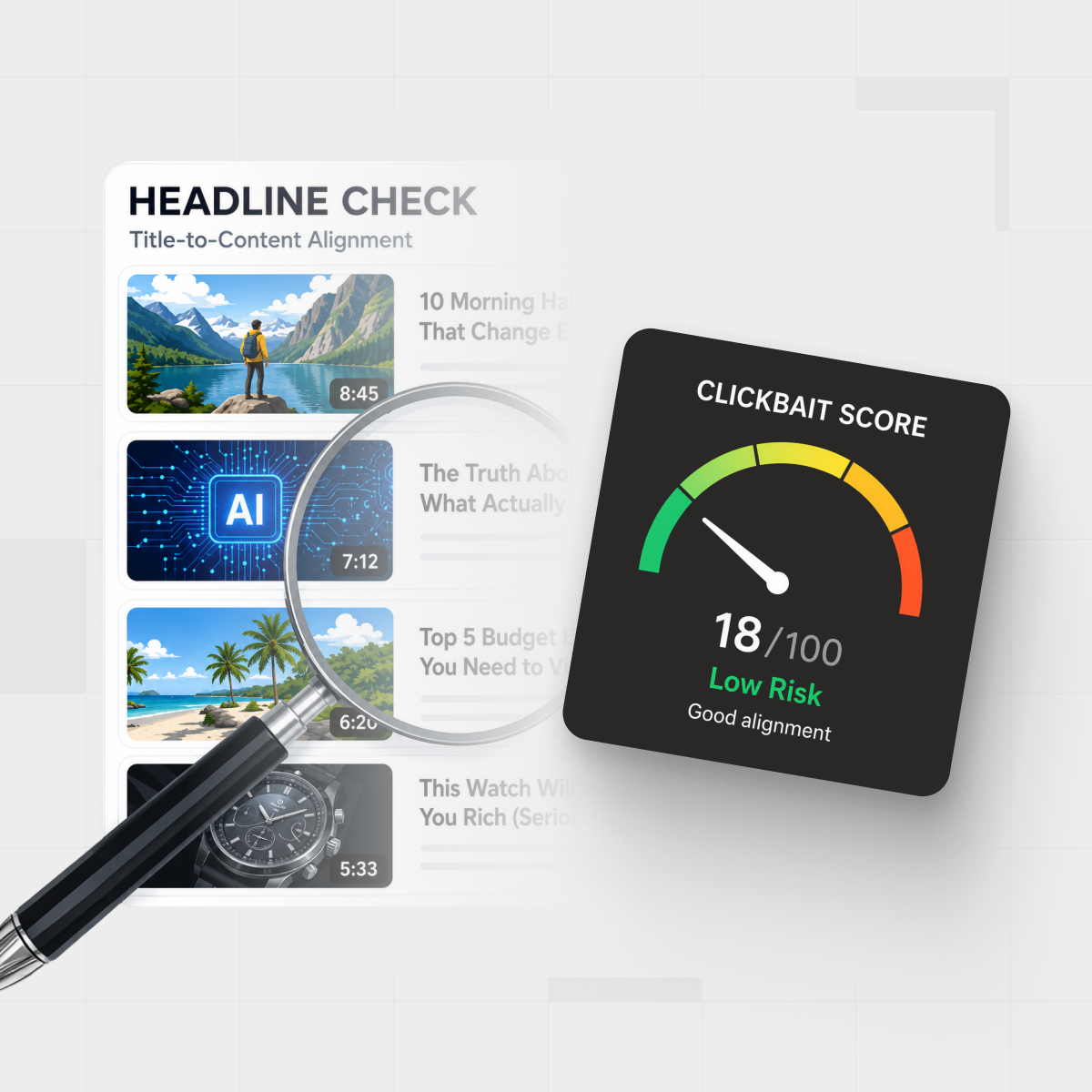
If you’re not sure where your own headlines stand, tools like the IsThisClickbait YouTube video analyzer can compare your title and thumbnail with the full transcript and flag places where the promise and content drift apart.
Why misleading titles hurt your channel long‑term
Yes, a dramatic headline can bump CTR in the short run. But YouTube doesn’t rank titles in isolation. It looks at what happens after people click.

Watch time and audience retention tank
When a title overpromises, people bounce. You’ll see it in YouTube Studio as low average view duration, a steep drop in the first 30–60 seconds, and fewer viewers making it to key moments in your video.
Those signals tell the recommendation system, “People clicked, but they didn’t stick around.” Over time, that can push your video - and sometimes your whole channel - out of home feeds and suggested slots.
By the numbers: clicks vs. trust
Across YouTube, impression CTR for most videos tends to fall somewhere between about 2–10%, with many educational and how‑to channels around 2–7% and visually driven niches sometimes reaching 6–12%.
It’s common to lose 20–40% of viewers in the first 30 seconds; if your retention graph shows a 50%+ early drop‑off, it’s a red flag that the title and opening don’t match what viewers expected.
Trust is harder to win back than views
Subscribers might forgive one sketchy headline, but a pattern is different: once viewers feel you keep stretching the truth — especially students or professionals who rely on your videos — they start hesitating before clicking and drift toward more reliable channels in your niche.
In other words: you’re swapping long‑term authority for a short‑lived spike in CTR.
What YouTube and the law say about misleading titles
YouTube doesn’t ban every spicy headline, but there are rules around deception that go beyond the algorithm simply “not liking” your video.
YouTube’s spam & deceptive practices policies
Under YouTube’s spam and deceptive practices policies, “egregious clickbait” is treated as misleading metadata — for example, fake live sports streams, titles that invoke celebrities or brands with no real connection in the video, or “free giveaway” uploads that send viewers to shady landing pages.
In a 2024 enforcement update, YouTube said it would start taking down these kinds of videos (beginning in India) and, for repeat offenders, issue strikes and limit recommendations.
When regulators might care
Once sponsorships or affiliate links are involved, the U.S. Federal Trade Commission’s truth in advertising rules apply: clearly disclose paid relationships, don’t misrepresent what a product can do, and avoid titles that function as deceptive ads in disguise.
Practically, anything you promise in the title about money, results, or safety should be accurate, properly qualified, and backed up in the video.
Honest Hook Checklist: 3 quick questions to test your next title
Before you hit publish, run your headline through this 30‑second check:
- Could a reasonable viewer accuse me of lying?
If they watched at normal speed without skipping, would they say, “That never happened,” or “That result wasn’t real”? - Is the most extreme phrase fully supported in the video?
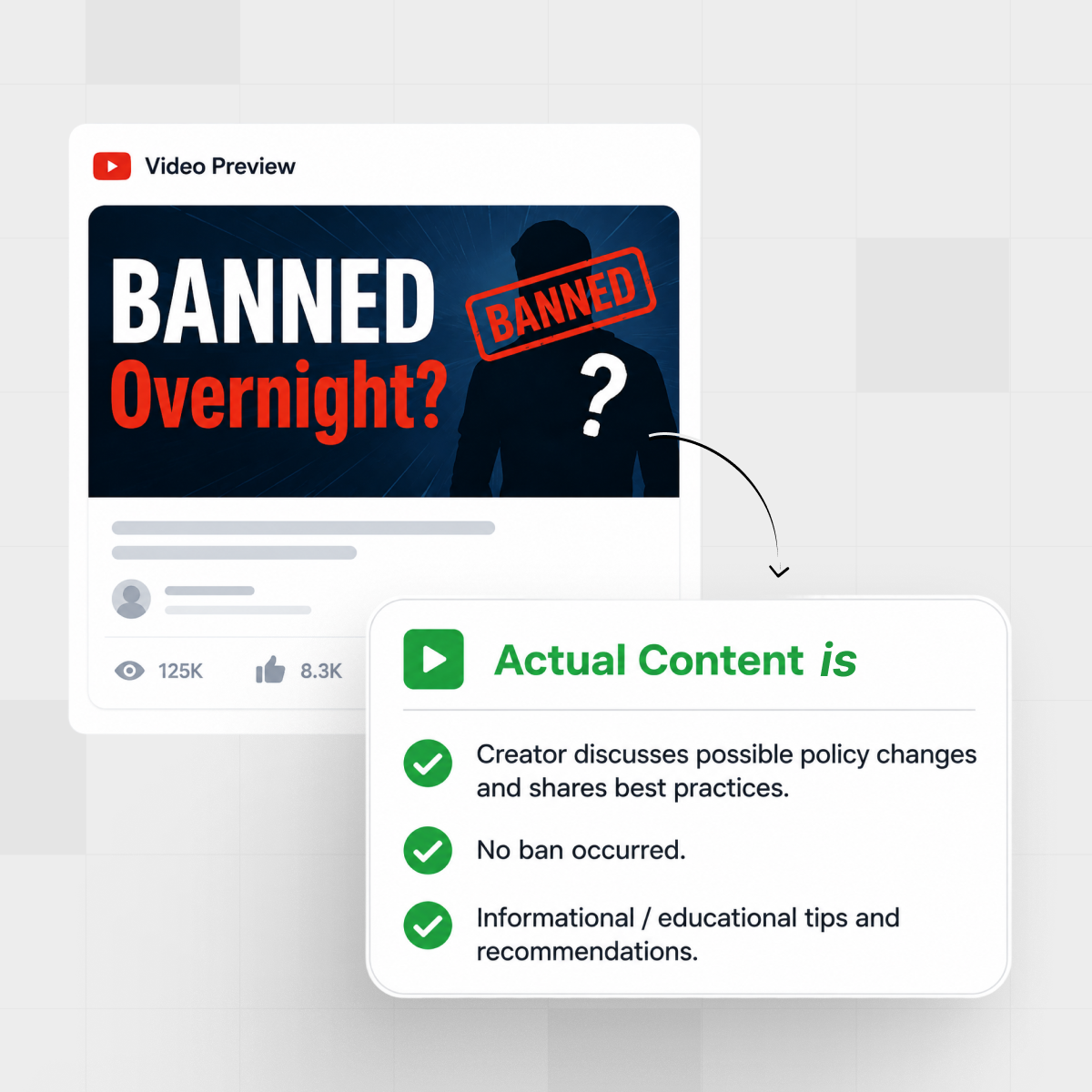
Words like “banned,” “exposed,” “guaranteed,” or “instant” need clear context and evidence. - Does the thumbnail hint at events that don’t exist?
For example, crying, broken laptops, or blocked dashboards that never show up on screen.
If any answer makes you squirm, adjust. You can keep the emotional punch while tightening the promise so it matches what you actually deliver.
7 ethical clickbait formulas that still get views
You don’t have to choose between boring and deceptive. Here are battle‑tested patterns that stay honest while still pulling clicks.
1. “I tried X so you don’t have to”
Great for tools, courses, or trends; just make sure the experiment really happened and you show the results.
2. “I was wrong about X”
Admitting you changed your mind is inherently compelling as long as you clearly explain what you believed before and what changed.
3. “Before/after with receipts”
Use specific numbers, screenshots, or timelines so any bold claim — like “From 2,000 to 50,000 views” — is backed by proof.
4. “The hidden downside of X nobody mentions”
Instead of saying X is worthless, reveal real trade‑offs or risks that viewers should factor into their decision.
5. “I copied X’s strategy for 30 days”
Borrow interest from bigger creators or brands only if you actually follow their strategy for a set period and show what happened.
6. “Do this, skip that” comparison titles
Make the contrast specific — for example, “Stop Chasing Shorts, Do This for Evergreen Views Instead” — and deliver clear recommendations that match the title.
7. “What I’d do if I had to start over”
Share your current best plan step‑by‑step, without inventing a fake catastrophe for drama.
If you want more headline structures, bookmark our guide on how to write YouTube titles. Pair a few of those formulas with steady content quality, and you’ll beat most creators leaning on empty drama.
How tools can flag misleading titles before you publish
When you’re close to a project, it’s hard to judge your own hype level, so outside checks help — from friends, editors, or smart tools.

Using IsThisClickbait as a “truth check” for your videos
IsThisClickbait runs alongside YouTube as a browser extension and web app. It pulls the full transcript, compares it to your title and thumbnail, and gives you:
- A clickbait score with a short explanation of why it scored that way
- Concise video summaries and key timestamps so you see what you’re really emphasizing
- Notes on whether your title oversells what appears in the content
Creators use it as a last‑minute sanity check: “Does this headline sound exciting and honest given what’s inside?” Viewers, students, and teams use the same tool to decide which long videos are worth their time.
If you’d like to try it, you can start analyzing videos with a paid plan and follow our YouTube title analyzer guide for a step‑by‑step walkthrough.
FAQ on misleading YouTube titles
Are misleading YouTube titles against the rules?
Titles that are a little dramatic are common. Titles that lie about what’s in the video, impersonate someone else, or push scams can fall under YouTube’s misleading metadata and scams rules. Repeated issues can lead to video removals, age‑restriction, or even strikes.
Can you get banned for misleading titles alone?
Most channels don’t get banned for one bad headline. But if deceptive titles are part of a pattern - especially around money, giveaways, or sensitive topics - they can combine with other policy violations and put your channel at risk.
Do misleading titles actually perform better?
Sometimes they bump CTR on the first impression. But after a few waves of viewers realize they’ve been misled, you’ll often see lower average view duration, more dislikes, and fewer returning viewers. In the long run, honest but compelling titles tend to lead to healthier analytics.
How can I check if my existing library is a problem?
Look inside YouTube Studio for videos with unusually high CTR and very low retention or strong negative feedback in comments. Those are good candidates to retitle or re‑thumbnail. You can also drop them into an AI analyzer like IsThisClickbait and see whether the score suggests misalignment between the promise and the transcript.
What about shorts and livestreams?
The same principle applies: don’t promise events, people, or giveaways that never show up. For livestreams, consider updating the title and thumbnail in the replay so it describes the actual topics covered rather than the pre‑stream hype.
Key takeaways
- Misleading YouTube titles swap long‑term trust and watch time for a tiny CTR bump.
- Policies from YouTube and regulators care less about “clickbait” as a style and more about whether viewers are misled.
- You can write strong, curiosity‑driven headlines without fabricating results or events.
- External checks — from tools like IsThisClickbait or from trusted peers — make it much easier to stay on the right side of that line.
Want to see how your own titles stack up? Analyze your next upload before you hit publish and give your viewers what they were actually promised.